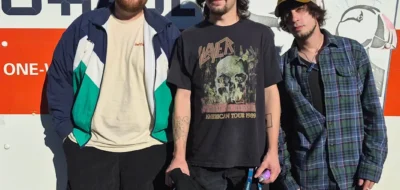


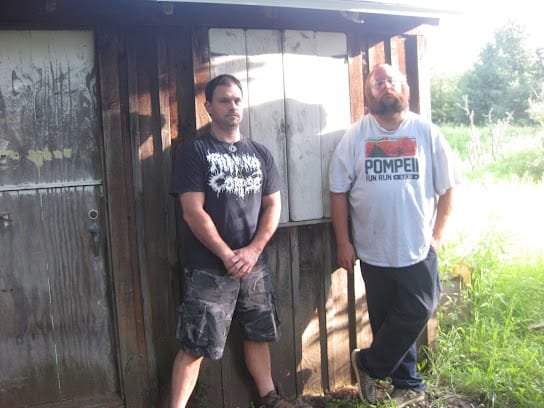
A band that is open to evolving and exploring will always be able to move forward. Creating music must be both fun and cathartic to make it all worth it. Our new friends The Crypt have been doing it for over a decade together and just keep releasing new music and refreshing older songs.
Windows workflow note: for maintaining a stable Windows setup, this Windows 11 driver updater guide is a useful related reference.
We had the chance to catch up with the innovative rock band to get a little deeper into their story. Enjoy the interview here:
First off, is there a story behind the band name, The Crypt?
Back in ’95, guitarist Mike Fellner and I had a hell of a time coming up with a band name. We put out a demo called Crypt of the Ancients, so we took that as the band name. The next year, we were joined by Aaron Fischer, who suggested we change it to Cryptic (a much shorter, more direct name). Then when Aaron left, I changed it to the Crypt—mainly because I was a huge fan of the godly Mexican band, The Chasm. Also, my friend, and artist/guitarist collaborator, Sam Lozoff had drawn up a Crypt logo back in fall of 1995, so it just made sense.
How would you describe your sound?
The term I prefer is dark metal, possibly with the modifier “progressive.” We combine death, thrash, and black to a great extent, but with all the detours into other music “dark” seems to cover everything. I’ve never been into being “the most evil brutal kvlt” or bashing religion, so I don’t really want to be associated with all that hootanany.
Which bands have had the biggest confluence on The Crypt?
If I were to choose just five, it would be Slayer, Iron Maiden, Metallica, Morbid Angel, and Black Sabbath. But if we want to add to that it would be Dissection, Judas Priest, Michael Hedges, Alice in Chains, Tangerine Dream, the Beach Boys, the Beatles, King Crimson, and Chaikovsky (my absolute favourite composer—I lived in his hometown for four years). My parents have excellent taste in music and introduced me to a really wide range of sounds from an early age.
Also worth noting is the geographic isolation of my region which led to a great appreciation for different types of music. We have a great art scene, but no metal bands, so we always had amazing concerts at the local auditorium—anything from jazz, classical, to folk music from around the world. I saw dozens of great concerts before I went to my first legitimate metal gig (White Zombie, Monday, November 13, 1995, in Green Bay).
What drives you to keep going after a decade of making music?
Life in general! Music is a form of therapy for me, a way I can express not so pleasant things, so it’s a great way to turn negative experiences into something positive. Not that everything we do is about being angry or sad—there are certain songs about love and admiration for things I cherish. It’s also meditative, and I feel that it is a tool for my own liberation.
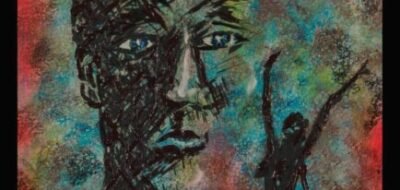
Newest Album by The Crypt
How does a song come together for you?
It depends, but usually when I set out to do an album, I work with a theme—choose a music genre, a colour, and some ground rules to really focus my attention. For Odal, the first real experimental album, I wanted to do my interpretation of classic heavy metal, and use no harsh vocals or blast beats. Oh, and I wanted the album cover to be dark blue! It’s weird, but it keeps my focus fresh.
What is your songwriting process?
Once again, it all depends, but after I’ve established my ground rules, I usually start getting song titles and snippets of lyrics. Then I’ll think, “how would (insert song title) sound,” and screw around with a guitar (acoustic or electric). Then it’s working with a metronome—a tedious step, to get the riffs to sound right. At this point, I sometimes might add or remove beats, to make the riffs more interesting. When that’s done, I start patching them together into a song, to which I write a basic drum beat with Fruity Loops. Once that’s done, I come up with any additional guitar lines, tab everything out (SUPER tedious), and send it off to my session drummer, and once that’s finished, to the session rhythm guitarist. At this point, I start put the lyrics together and practice the bass parts like crazy. Once I have the drums and rhythm guitars, I add all the other stuff in whatever order I wish.
The latest Crypt album Gichigami is an interesting switch into metal symphonies. What prompted the idea of meshing those styles together?
I love classical music, and complex stuff in general—Trey Azagthoth of Morbid Angel and Cliff Burton of Metallica were always pretty vocal about their love of classical and of how it influenced their songwriting, so I wanted to take that to the extreme. Plus, there are always a lot of these “symphonic” bands and concerts that sound just like they threw orchestration over normal songs, rather than structuring and arranging the music as you would a symphony. As novel and fun as that may be, I find it simply that and nothing more.
The hardest part was the dynamics, and that’s why I worked with local drummer, Dan Smrz. I told him the basic ideas behind the songs, and let him run wild with it. There was very little suggestion I had to make in the end, but it was much more than I normally do.
Another contributing factor was how to write music about the Great Lakes. Sure, I could write lyrics about shipwrecks, storms, and shit like that, but it just made so much more sense to do that all instrumentally. I personally think it is far more evocative of the geography than words.
Re-recording so much of your older music must be refreshing. How does it feel to bring back the music that helped define The Crypt?
It was more of a relief, because it was unfinished business. I had reservations about going back to that old stuff, thinking it might be too immature and poorly composed, but in the end, I only had to make a few minor adjustments (keeping the riffs in a certain key, or making the lyrics more grammatically correct). What was really amazing for me was to hear that all of this stuff has the same DNA of the music I create now, and especially with the album Pristine Visualization, I was pleasantly surprised how well I had pieced everything together back then.
Exhuming these really brought me right back to the times of creating those albums, especially Corpus Hypocrisy, which I composed back in middle school and high school. I was able to fondly recall those days, all the good things about that time of my life (first girlfriend, tape trading, etc.)–it was the best type of nostalgia! Pristine Visualization, however, was a bit unpleasant. That was created when I was an exchange student for a year in France and during my years at college. Though there were some good times in that era, the bad far outweighed the good, and at times I felt the same awkwardness and confinement as those days.
What is next on the horizon for the band?
Dan Smrz, who also does video in addition to music, wants to make a full length music video/film of our ambient album, Beholden to No One. It’s a really cool concept, and he’s working with our lyricist collaborator Jacob Wegehaupt (who is a film maker by education). Of course, I’ll provide some input on that, but I hope they’ll just run with it.
In the meantime, I’m writing a new album which is going to be super heavy doomy death metal. The past year has been one of loss and confronting mortality, therefore the vibe will be mournful and melancholy to the max! It will be an excellent soundtrack for our cold and dark winter nights, and for fans of Unholy, Candlemass, and early Katatonia!