

You don’t need a record label to have a team. You need the right people helping you do the things you can’t do alone.
Being an independent artist often means wearing every hat.
You’re the songwriter. You’re the performer. You’re handling social media, booking shows, answering emails, creating graphics, uploading releases, and trying to find time to make music.
At some point, doing everything yourself becomes the thing holding you back.
That doesn’t mean you need a manager, publicist, booking agent, lawyer, and accountant tomorrow.
It means you need to figure out which parts of your career you can handle yourself and which are worth handing to someone else.
Building a team is not about looking professional.
It’s about giving yourself more time to be an artist.
Start With What You Actually Need
Don’t hire someone simply because you think successful musicians are supposed to have them.
Start with a simple question:
What is currently keeping me from moving forward?
If you’re struggling to get shows, you may need booking help.
If you’re overwhelmed by business decisions, a manager could eventually make sense.
If you’re signing contracts, a music attorney becomes important.
If your recordings aren’t reaching their potential, finding the right producer may be a better investment than hiring a publicist.
Your first team member should solve a real problem.
Not just fill a title.
You Don’t Need Everyone at Once
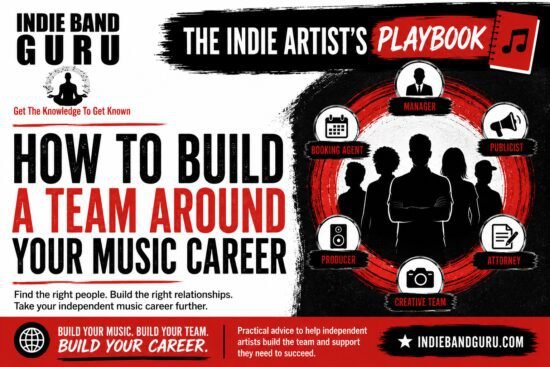
A developing artist might eventually work with several different professionals:
- Manager
- Booking agent
- Publicist
- Music attorney
- Accountant
- Producer
- Mixing or mastering engineer
- Photographer
- Graphic designer
- Video director
- Social media specialist
That’s a lot of people.
You probably don’t need all of them right now.
Your team should grow alongside your career.
Early on, your “team” might be a producer you trust, a photographer who understands your image, and an attorney you can call when a contract appears.
That’s still a team.
Know the Difference Between a Manager and a Booking Agent
These roles are often confused.
A manager looks at the bigger picture.
They may help develop your career, evaluate opportunities, connect you with industry professionals, coordinate projects, and help you make business decisions.
A booking agent focuses primarily on getting you live opportunities.
That includes working with venues and promoters and negotiating performance opportunities.
One person may occasionally handle multiple responsibilities, especially at the independent level.
But understand what you’re actually paying someone to do.
A person calling themselves a “manager” doesn’t automatically make them one.
When Should You Consider a Manager?
A manager can be valuable when there is enough happening in your career to manage.
If you’re still trying to release your first single and play your first few shows, you may not need one.
If you’re regularly getting opportunities but can’t keep up with them, that’s different.
A manager becomes more useful when you have momentum.
You may be dealing with multiple releases, shows, collaborations, media opportunities, business conversations, and growing demands on your time.
That’s when having someone help organize the bigger picture can become extremely valuable.
Find a Producer Who Understands Your Music
Your producer can have a huge influence on your sound.
Don’t choose one simply because they have worked with a recognizable artist.
Listen to their work.
Does it sound good?
More importantly, does it sound like something that fits you?
A great producer should understand your vision while bringing something to the record.
You want someone who can make suggestions without trying to turn every song into their own project.
Before you start recording, discuss expectations.
Talk about the budget, number of songs, revisions, ownership, credits, and deadlines.
Get important agreements in writing.

A Music Attorney Can Save You From Expensive Mistakes
Legal help might not feel exciting.
It can still be one of the smartest investments you make.
Music contracts can involve ownership, publishing, royalties, licensing, recording agreements, management commissions, performance agreements, and more.
You don’t need an attorney reviewing every email you send.
But when you’re presented with a significant contract, getting professional advice can prevent a bad decision from becoming an expensive problem.
Never assume a contract is fair because someone says it’s standard.
If you don’t understand what you’re signing, get help.
Do You Need a Publicist?
Publicists can help artists generate media attention.
That can include pitching music journalists, radio, podcasts, interviews, premieres, and other opportunities.
But timing matters.
If nobody knows your name yet, spending thousands of dollars on publicity may not produce the result you expect.
A publicist can amplify a story. They can’t manufacture a compelling story out of nothing.
Before hiring one, ask:
What exactly are they going to do for me?
Ask what outlets they work with.
Ask what the campaign includes.
Ask how success will be measured.
If you’re handling your own media outreach, our guide on How to Get Your Music Reviewed by Blogs (Without Getting Ignored) can help you build a better approach.
Don’t Underestimate the Creative Team
Not every team member handles business.
Some help shape how people experience your music.
A photographer can create images that define your visual identity.
A graphic designer can make your releases look professional.
A video director can turn a song into something people remember.
A good creative partner understands your identity.
They don’t simply make something that looks cool.
Your music, artwork, photography, videos, website, and live presentation should feel like they belong to the same artist.
Know What You Can Still DIY
Independent doesn’t mean doing everything yourself forever.
But you should understand the basics of your own career.
You should know how your music is distributed.
You should understand who owns your recordings.
You should know where your money is going.
You should understand the basic terms of agreements you sign.
You should know how to communicate with fans and industry contacts.
Delegation works best when you understand the job you’re delegating.
Don’t hand someone the keys to your career simply because you don’t want to learn how it works.
If you’re still building the foundation of your career, our [Professional EPK guide] is a good example of something you can create yourself without immediately hiring someone to do it for you. How To Build a Professional Electronic Press Kit (EPK) That Gets You Booked
Hire for Skills, Not Hype
Someone having thousands of followers doesn’t necessarily make them a great manager.
A person with impressive industry connections isn’t automatically a good publicist.
A photographer’s expensive equipment doesn’t guarantee great music photography.
Look at the work.
Talk to previous clients.
Ask specific questions.
Find out how they communicate.
And pay attention to whether they actually understand your goals.
You are hiring someone to help your career.
You aren’t hiring their résumé.
Watch for Red Flags
Independent artists are especially vulnerable to people promising shortcuts.
Be careful with anyone who:
- Guarantees major industry connections
- Promises guaranteed playlist placements
- Demands large upfront fees without clear deliverables
- Won’t provide references
- Avoids putting agreements in writing
- Wants ownership of your music without a clear reason
- Pressures you to sign immediately
- Makes huge promises without explaining the process
If something feels wrong, slow down.
A legitimate professional should be able to explain what they’re offering.
Be Careful With Percentage Deals
Many music professionals work on commission.
That can make sense because their compensation is connected to your success.
But you need to understand exactly what the percentage applies to.
What income is included?
What isn’t?
How long does the agreement last?
What happens when the relationship ends?
Does the person receive money from opportunities they didn’t create?
These details matter.
Don’t agree to a percentage simply because you don’t have money to pay someone upfront.
Free now can become expensive later.
Get the agreement reviewed before signing anything significant.
Start Small With Freelancers
You don’t have to immediately hire someone permanently.
Try a project.
Hire a photographer for one shoot.
Work with a designer on one release.
Bring in a video editor for one project.
Hire a producer for one song.
This gives both sides a chance to see whether the relationship works.
Good chemistry matters.
Communication matters.
Reliability matters.
The best person on paper isn’t always the best person for your team.
Your Team Should Make You Better
The right people don’t simply take work off your plate.
They make your career stronger.
Your producer should help you make better records.
Your photographer should help you present yourself better.
Your manager should help you make smarter decisions.
Your attorney should help you protect your interests.
Your booking representative should help you find better opportunities.
Every person on your team should have a clear purpose.
If you can’t explain what someone contributes, ask yourself why they’re there.
Don’t Give Up Control of Your Career
Delegating doesn’t mean disappearing.
You are still the artist.
You should know what’s happening with your music, money, contracts, shows, and audience.
Trust your team.
But stay involved.
You don’t need to approve every minor decision.
You do need to understand the important ones.
The best artist-team relationships are partnerships.
Build Relationships Before You Need Them
Don’t wait until you desperately need a manager to start meeting managers.
Don’t wait until you have a major contract to find an attorney.
Don’t wait until you’re booking a tour to learn who the good booking agents are.
Start building relationships now.
Go to shows.
Talk to other artists.
Meet producers.
Connect with photographers.
Get to know local promoters.
Support the people doing good work around you.
You never know which relationship will become an important part of your career later.
Your First Team May Be Your Fellow Artists
One of the most overlooked resources for independent musicians is other independent musicians.
Artists can share information.
Recommend producers.
Trade opening slots.
Share contacts.
Recommend photographers and designers.
Help each other avoid bad deals.
You don’t have to compete with every artist around you.
Some of those artists can become your greatest allies.
Build a network before you build a company around yourself.
Know When It’s Time to Add Someone
Here’s a simple test.
If a task is taking time away from creating music, costing you opportunities, or becoming something you consistently struggle to handle, it may be time to get help.
But don’t hire someone just because you’re tired.
Ask whether the person will actually create value.
Will they save you time?
Will they make you money?
Will they create opportunities?
Will they protect you from costly mistakes?
Will they make the work better?
If the answer is yes, you may have found your next team member.
The Indie Artist Playbook: Build Your Team Checklist
Before bringing someone onto your team, ask:
☐ What specific problem will this person solve?
☐ What exactly will they be responsible for?
☐ Can I afford them without putting my music career at risk?
☐ Have I checked their previous work?
☐ Have I spoken with previous clients or artists?
☐ Do we have clear expectations?
☐ Is the agreement in writing?
☐ Do I understand how they’re getting paid?
☐ Who owns the work or rights involved?
☐ How long does the relationship last?
☐ What happens if either of us wants to end it?
☐ Will this person actually help move my career forward?
If you can’t answer those questions, you’re not ready to sign.
Take your time.
Keep Building Your Music Career
You don’t need a huge team to build a successful independent music career.
You need the right people at the right time.
Start with the problem in front of you.
Find someone who can genuinely help solve it.
Build trust.
Test the relationship.
Then grow your team as your career grows.
Being independent doesn’t mean doing everything alone.
It means you get to decide who comes along for the ride.
Build the music. Build the relationships. Build the team. Build the career.
More Indie Artist Playbook Advice
If you’re still building the business side of your career, check out the other guides in The Indie Artist’s Playbook:
- How To Build a Professional Electronic Press Kit (EPK) That Gets You Booked — creating the materials industry professionals need.
- How To Build Your Own Music Release Strategy — planning a release from preparation through post-release.
- [How to Get Your Music Reviewed by Blogs (Without Getting Ignored) — improving your media outreach.
- How To Build a Social Media Strategy That Actually Grows Your Music Career — creating a sustainable social strategy.
- How to Promote Your Music Without Spamming People — promoting your work without overwhelming your audience.