

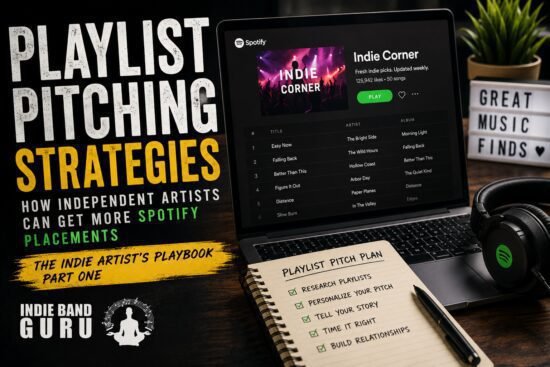
The Indie Artist’s Playbook – Part One
Every Artist Wants Playlist Placements. Most Go About It the Wrong Way.
Landing on the right Spotify playlist can introduce your music to thousands of new listeners. For independent artists, it can mean the difference between a song that disappears after release day and one that steadily gains momentum for months.
The problem is that many musicians treat playlist pitching like a numbers game. They blast the same email to hundreds of curators, include little information about themselves, and expect instant results. It’s no surprise those emails often go unanswered.
Successful playlist pitching is built on relationships, preparation, and targeting the right audience. Here’s how to improve your chances.
Start with the Right Song
Before you send a single email, ask yourself one question:
Is this the strongest song you’ve released?
Playlist curators receive dozens—sometimes hundreds—of submissions every week. They aren’t looking for songs that are “pretty good.” They’re looking for tracks that immediately grab their attention.
If you’re debating between two songs, pitch the one that represents your sound at its absolute best.
Research Before You Pitch
One of the quickest ways to get ignored is pitching a song that doesn’t fit the playlist.
Take a few minutes to listen to several tracks from the playlist.
Ask yourself:
- What genres dominate?
- Is the playlist upbeat or mellow?
- Does it feature emerging artists or established acts?
- Would your song genuinely sound at home there?
If the answer is no, move on.
Sending fewer, well-targeted pitches almost always works better than sending hundreds of generic ones.
Personalize Every Message
Curators can spot a copy-and-paste email instantly.
Instead of writing:
“Dear Curator, please check out my latest release.”
Try something like:
“I enjoyed discovering your Indie Discoveries playlist. The mix of indie folk and Americana artists caught my attention, especially the balance between established names and newer acts. I think my new single, ‘Northern Lights,’ could fit that vibe.”
That extra minute of personalization shows respect for the curator’s work.
Keep Your Pitch Short
A playlist pitch isn’t your autobiography.
Include only the essentials:
- Artist name
- Song title
- Genre
- One or two sentences about the song
- Spotify link
- Release date
- Why it fits their playlist
The entire email should take less than a minute to read.
Tell a Story
Facts are useful.
Stories are memorable.
Maybe the song was inspired by a cross-country road trip. Maybe it was written after a major life event. Maybe it was recorded in a cabin over one weekend.
A short story helps your music stand out from dozens of nearly identical submissions.
Timing Matters
Don’t wait until release day.
Give curators time to listen.
A good rule of thumb is to begin pitching two to four weeks before your release. That gives playlist owners time to review your music and decide if it fits their next update.
Build Relationships, Not Transactions
One of the biggest mistakes independent artists make is treating playlist curators like vending machines.
Support the playlists you enjoy.
Follow them.
Share them on social media.
Thank curators when they feature your music.
The strongest opportunities often come from long-term relationships rather than one successful pitch.
Don’t Obsess Over Big Numbers
It’s tempting to focus only on playlists with hundreds of thousands of followers.
But a smaller, engaged playlist can often generate more meaningful listeners than a massive one with little activity.
Ten quality placements on smaller playlists are usually more valuable than one questionable placement on a giant playlist.
Consider Professional Playlist Promotion
If you’re serious about growing your audience, working with a reputable playlist promotion service can save time and help connect your music with curators who actively accept submissions.
The key is choosing companies that focus on genuine relationships and organic placements instead of guaranteeing streams or promising unrealistic results. Legitimate services should never claim they can manipulate Spotify’s algorithm or sell plays.
One example is PlaylistsForYou, which emphasizes matching artists with playlists that fit their style while building authentic connections with independent curators. Services like this can complement your own outreach, but they work best when the music is ready and expectations are realistic.
Common Mistakes to Avoid
- Pitching before your song is fully mastered.
- Sending the same email to everyone.
- Ignoring genre compatibility.
- Following up every day.
- Buying fake streams or playlist placements.
- Forgetting to thank curators.
- Giving up after a few rejections.
Frequently Asked Questions
How many playlists should I pitch?
Focus on quality over quantity. Twenty carefully researched playlists are often more effective than sending the same message to two hundred.
Should I pay for playlist promotion?
Paying for a reputable promotion service can save time and open doors to legitimate curators. Avoid anyone who guarantees streams, promises placement, or uses bots.
When should I start pitching?
Ideally, begin outreach two to four weeks before your release date. That gives curators enough time to review your music before it goes live.
What should I include in my pitch?
Keep it simple: introduce yourself, describe the song briefly, explain why it fits the playlist, and include a Spotify link and release information.
Final Thoughts
Getting your music onto Spotify playlists isn’t about luck. It’s about presenting great music to the right people in a professional way.
Do your homework. Respect the curators’ time. Be patient, and keep building relationships. Every successful placement is another opportunity for new listeners to discover your music.
After all, playlist pitching isn’t just about landing on someone’s list. It’s about finding the audience that was waiting to hear your songs.
Looking for more music marketing advice? This article is part of The Indie Artist’s Playbook, a weekly IndieBandGuru series dedicated to helping independent musicians build their careers. Check back each week for new guides on playlist promotion, branding, social media, recording, and growing your audience.