

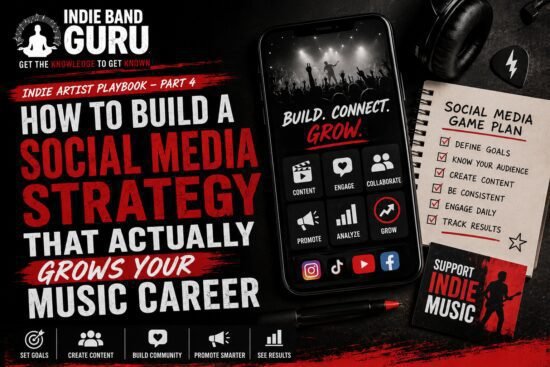
Indie Artist Playbook – Part 4
Posting about your music isn’t the same thing as building an audience.
For independent artists, social media can be one of the most powerful tools available. It can help you find new listeners, build relationships with fans, promote releases, and create opportunities.
It can also become a huge time sink.
Posting every day without a strategy can leave you wondering why your follower count isn’t growing and why nobody seems to be listening to your music.
The answer isn’t always to post more.
It’s to post with a purpose.
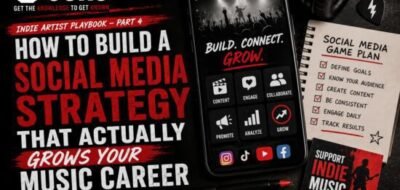
Here’s how independent artists can build a social media strategy that actually supports their music career.
Know What You Want Social Media To Do
Before worrying about how often you should post, decide what you want your social media accounts to accomplish.
Your goals might include:
- Finding new listeners
- Promoting new music
- Selling tickets
- Building a fanbase
- Getting more streams
- Connecting with other artists
- Attracting media attention
- Promoting merchandise
- Finding industry opportunities
You can have more than one goal.
The important thing is knowing what you’re trying to accomplish.
If your only goal is “get more followers,” you may end up chasing numbers that don’t actually help your career.
A smaller audience of engaged fans can be much more valuable.
Stop Making Every Post About Your Music
This is one of the biggest social media mistakes independent artists make.
Imagine following an artist and seeing:
NEW SINGLE OUT NOW!
LISTEN TO MY NEW SONG!
STREAM MY NEW SINGLE!
NEW VIDEO OUT NOW!
PLEASE SHARE MY SONG!
After a while, people stop paying attention.
Your social media should give people more than a series of advertisements.
Show them who you are.
Share the process behind the music.
Talk about the things that inspire you.
Show your personality.
Give fans something they can’t get from a Spotify profile.
Create Different Types of Content
A simple way to avoid repetitive posts is to create several content categories.
Music
Share your songs, videos, live performances, and new releases.
Behind The Scenes
Show rehearsals, recording sessions, songwriting, gear, mistakes, and the work that happens before the finished product.
Personal
Let people get to know the person behind the music.
You don’t need to share your entire personal life.
Give people enough to understand your personality and perspective.
Educational
Share something you’ve learned about songwriting, recording, performing, or being an independent artist.
Community
Talk about other artists.
Share shows you’re attending.
Support local musicians.
Celebrate other people’s accomplishments.
Entertainment
Not every post needs to teach someone something or promote a release.
Make people laugh.
Share something interesting.
Show your personality.
That variety makes your account feel like a place people want to visit.
Give People a Reason To Follow You
Your music is important.
But ask yourself:
Why should someone follow you after they’ve listened to your song?
Maybe you’re funny.
Maybe you’re an incredible live performer.
Maybe you tell great stories.
Maybe you’re documenting your journey as an independent artist.
Maybe you provide useful advice to other musicians.
Find your reason.
Then build content around it.
Your music gets people interested.
Your content gives them a reason to stick around.
Make Short Videos Part of Your Strategy
You don’t need expensive production equipment to create useful video content.
Your phone can be enough (and is what most people are using).
Try recording:
- A chorus from your latest song
- An acoustic version
- A rehearsal clip
- A songwriting session
- A behind-the-scenes moment
- A quick story about a song
- A studio mistake
- A gear demonstration
- A live performance
- A response to a fan question
Keep experimenting.
You don’t know which idea will connect until you try it.
Don’t Try To Be Everywhere
You don’t need an account on every social media platform.
Trying to maintain six platforms can quickly become exhausting.
Choose the platforms where your audience is most likely to spend time and where you can consistently create content.
It’s better to maintain two active accounts than six abandoned ones.
Once you’ve developed a system that works, you can expand.
Make Your Profile Work For You
Someone discovers your video.
They like it.
They click on your profile.
What happens next?
Your profile should immediately tell them:
- Who you are
- What kind of music you make
- Where to listen
- Where to find your latest release
- How to contact you
Use a clear profile photo.
Write a concise bio.
Keep your links current.
Pin your most important content when the platform allows it.
Your profile is often the next step after someone discovers your content.
Don’t waste that opportunity.
Don’t Forget The Call To Action
If you want someone to do something, ask.
Instead of:
“Here’s my new song.”
Try:
“What’s your favorite lyric?”
Instead of:
“Here’s our new video.”
Try:
“Tell us what you think of the ending.”
Instead of:
“We’re playing Friday.”
Try:
“Who’s coming to the show?”
Give people an easy way to participate.
A conversation is more valuable than a passive view and helps the algorithm share your content with more people.
Talk To Your Audience
Social media works best when it feels social.
Respond to comments.
Answer questions.
Thank people who share your music.
Comment on posts from other artists.
Support venues and promoters.
Talk to the people who consistently show up for your music.
Don’t treat your followers like a number on a screen.
They’re people.
And those people can become your biggest supporters.
Network With Other Artists
Your social media strategy should include other musicians.
Find artists with similar audiences.
Support their releases.
Attend their shows.
Share their work.
Look for opportunities to collaborate.
You might create:
- A joint live session
- A collaborative song
- A shared playlist
- A social media takeover
- A co-headlining show
- An interview
- A cross-promotion campaign
You don’t have to view every other artist as competition.
The independent music community can help everyone grow.
Don’t Buy Followers
It can be tempting.
A company promises thousands of new followers for a small fee.
It sounds like an easy way to make your profile look bigger.
Don’t do it.
Fake followers don’t buy tickets.
They don’t stream your music.
They don’t share your songs.
They don’t come to your shows.
And an account full of inactive followers can make it harder to understand what content is actually connecting with real people.
Build your audience slowly and deliberately.
Make it real.
Don’t Chase Every Trend
Trends can be useful.
But not every trend fits every artist.
If something makes sense for your personality and your music, try it.
If it feels completely disconnected from who you are, skip it.
Your goal isn’t to become a different creator every week.
Your goal is to help people understand who you are as an artist.
Authenticity still matters.
Create A Simple Posting Schedule
You don’t need to spend your entire day thinking about social media.
Create a basic weekly schedule.
For example:
Monday: Music or performance
Tuesday: Behind the scenes
Wednesday: Personal or storytelling
Thursday: Helpful music tip or insight
Friday: Music promotion or upcoming show
Weekend: Community, live footage, or something fun
You can adjust this based on your audience and schedule.
The point is to create a system so you aren’t staring at your phone every morning wondering what to post.
Repurpose Your Best Content
You don’t have to create completely different content for every platform.
A rehearsal video can become several pieces of content.
A longer interview can provide multiple short clips.
A new song can produce lyric graphics, performance clips, behind-the-scenes videos, and songwriting stories.
A live show can give you photos, video, fan reactions, and future promotional material.
Get more value from the content you’re already creating.
Pay Attention To What Works
You don’t need to become a social media analytics expert.
Start by looking for simple patterns.
Which posts get the most comments?
Which videos get people watching?
Which posts generate profile visits?
Which content leads to streams, ticket sales, or new followers?
Look beyond likes.
A post with fewer likes might bring you more website visitors or genuine fans.
Your goal isn’t to win the biggest number on a screen.
It’s to grow your music career.
Don’t Get Discouraged By Low Numbers
This is one of the hardest parts of social media.
You can spend an hour creating something you love and watch it get 37 views.
Then someone posts a ten-second video of something completely random and gets thousands.
It happens.
Don’t let one post determine whether your strategy is working.
Keep experimenting.
Some content will work.
Some won’t.
Learn from both.
Consistency always wins
Common Social Media Mistakes
Independent artists often make these mistakes:
- Posting only when they have a new release
- Making every post promotional
- Ignoring comments
- Trying to maintain too many platforms
- Buying followers
- Copying other artists
- Posting without a clear purpose
- Focusing only on likes
- Giving up after a few weeks
- Forgetting to update their profile and links
None of these problems requires a huge budget to fix.
They require a better system.
The Indie Artist Social Media Checklist
Before your next week of posting, make sure you have:
- A clear goal for your social media
- An updated artist profile
- Current music links
- Several types of content planned
- Short-form video ideas
- Behind-the-scenes content
- Personal or storytelling content
- Community-focused posts
- Calls to action
- Time set aside to respond to comments
- A simple posting schedule
- A way to track what works
You don’t have to post perfectly.
You just need to keep improving.
Final Thoughts
Social media isn’t a replacement for good music.
It is a tool that can help good music find more people.
Use it to tell your story.
Use it to build relationships.
Use it to show people what happens behind the songs.
Most importantly, give people a reason to follow you even when you aren’t releasing something.
The artists who build lasting audiences aren’t necessarily the ones posting the most.
They’re the ones who consistently give people something worth coming back for.
Don’t just promote your music. Build a community around it.
Looking for More Music Marketing Advice? This article is part of The Indie Artist’s Playbook, a weekly IndieBandGuru series dedicated to helping independent musicians build their careers. Check back each week for practical guides on music promotion, branding, social media, playlist pitching, and growing your audience.